News Story
For nearly a hundred years, Bournemouth Pavilion has stood as a cultural venue on the town’s seafront.
Now, as the venue approaches its centenary in 2029, its newly appointed archive team is inviting residents and visitors alike to search their attics, basements, and cupboards for memorabilia that could help complete the theatre’s remarkable story.
The archive team hopes that further donations from members of the public, including surviving programmes, council records, building plans, or newspaper notices, may shed light on some of the venue’s mysteries and gaps in time.
Preserving a living legacy
Bournemouth Pavilion’s archive team, made up of a dedicated team of volunteers, is working tirelessly to log and preserve every programme, poster, and performance that has graced the venue. Their mission is not only to safeguard the past but to uncover forgotten stories that shaped Bournemouth’s cultural identity.
Recent research has drawn their attention to one pivotal moment: the laying of the building’s foundation stone on 23 September 1925, a ceremony conducted “with due ceremonial … in the presence of a large gathering” by Alderman C. H. Cartwright, a long-serving local politician and chair of the Bournemouth Pavilion Committee.
From vision to reality
The idea of constructing a formal entertainment venue in Bournemouth dates back to 1842, (another culturally significant moment for the county - the year celebrated author Thomas Hardy was born) when the council first discussed the possibility.
For decades, entertainment was confined to the modest meeting rooms of the Bellevue Hotel, where travelling performers entertained small audiences. It wasn’t until the mid-1920s that the dream of constructing a grand Pavilion to host cultural events and entertainment in the town finally took shape.
Construction began in 1925, and on 19 March 1929, Bournemouth Pavilion opened its doors in a ceremony led by HRH the Duke of Gloucester. Built at a cost of £250,000 (nearly £20.3 million in today’s money), it was hailed as the first theatrical venue of its kind in the UK. The entire town turned out to witness its inauguration.
An architectural triumph
Designed by London architects G. Wyville Home and Shirley Knight, with steelwork overseen by Sir Owen Williams, Bournemouth Pavilion was immediately celebrated as a masterpiece of art deco design. National newspapers praised its elegance: The Daily Telegraph admired its “seemliness and dignity”, while the Yorkshire Post declared it “the last word in luxury, comfort and pleasure.”
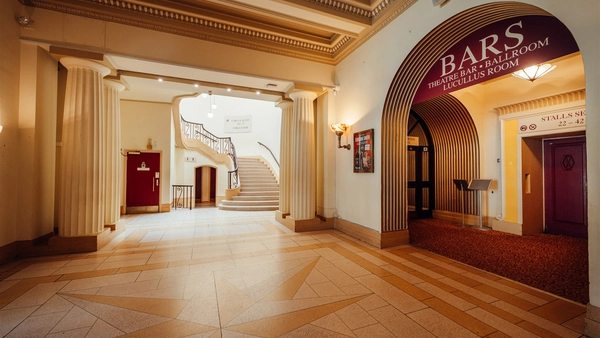
Now a Grade II listed building, Bournemouth Pavilion’s red brick and Portland stone façade remains a striking example of the town’s municipal architecture. Inside, audiences were dazzled by pastel pink and terracotta interiors, gilt ornamentation, and glittering chandeliers, which were later removed during the Second World War for safekeeping.
Celebrating a cultural legacy
Today, Bournemouth Pavilion continues to deliver year-round entertainment and events, drawing hundreds of thousands of visitors each year. This in turn brings footfall into the town, which supports other local businesses including hotels, bars, and restaurants boosting the local economy.
The venue’s diverse programme includes musicals, opera, ballet, pantomime, comedy, and dances. Gala dinners, banquets, receptions, fairs, corporate presentations, product launches, conferences and exhibitions also feature as well as tea dances, free-to-attend open days, and community performances.
The theatre is also home to the Compton Organ, one of the few remaining instruments of the 550 initially installed in churches, cinemas, theatres & concert halls between 1926 and 1939. Compton Organ shows are held throughout the year in partnership with the Pavilion Organ Fund to continue to raise funds for the organ’s maintenance and restoration.
Christian Knighton, who has worked at Bournemouth Pavilion for more than 50 years, joined the theatre as a stagehand in 1975. Christian now oversees and supports the venue’s archive and its dedicated team of volunteers.
Bournemouth Pavilion is operated by registered charity and social enterprise BH Live on behalf of BCP Council.
On behalf of BH Live, Christian said;
“As we approach Bournemouth Pavilion’s centenary, we want to ensure that every chapter of its history is preserved and celebrated. The archive team have already done a fantastic job on uncovering some of the venue’s key histories.
“That’s why we’re inviting the community to help us uncover hidden treasures. Whether it’s a programme tucked away in a drawer or a photograph gathering dust in an attic, every piece of memorabilia adds to the rich tapestry of Bournemouth Pavilion’s past, which will help us share its legacy with future generations.”
Cllr Andy Martin, Portfolio Holder for Customer, Communications and Culture, said:
“The Pavilion is more than just a building - it’s a foundation of Bournemouth’s cultural heritage and a place where countless memories have been made over the past century. From its art deco splendour to the incredible performances that have graced its stage, it has brought joy and inspiration to generations.
“As we look ahead to its centenary, we want to honour not only the venue itself but everyone who has contributed to its story - from the visionaries who built it to the performers, staff, and audiences who have kept its spirit alive. We invite members of the public to donate any items they may have kept over the years to support this opportunity to celebrate the Pavilion’s legacy and to ensure it continues to thrive for the next hundred years.”
Every artefact adds to the story of a building that has entertained generations and continues to inspire pride in Bournemouth. By sharing your treasures, you can help ensure that the Pavilion’s legacy is preserved for the next hundred years. For more information, get in touch with the team at pavilion.archive@bhlive.org.uk.
For more information about Bournemouth Pavilion, including what’s on, visit bournemouthpavilion.co.uk.